Ride or Die
Magazine, reader area, newsroom tool, archive migration and hosting.
Ride or Die is the online magazine of adrenaline sports: surf, skate, BMX, mountain bike, snow, kite, climbing, through interviews, profiles and editorials. We rebuilt the site end to end, from the magazine to the newsroom's writing tool, carrying over twelve years of archives without losing a single address.
- Scope
- Magazine, readers, newsroom
- Archives
- 425 articles since 2014
- Speed
- Home page in 0.18 s, down from 5.8 s
- Timing
- 12 days, from first screen to launch
Response times as the median of five readings: old site on 14 October 2026, new site in production on 26 October 2026. Archives migrated on 15 October 2026.
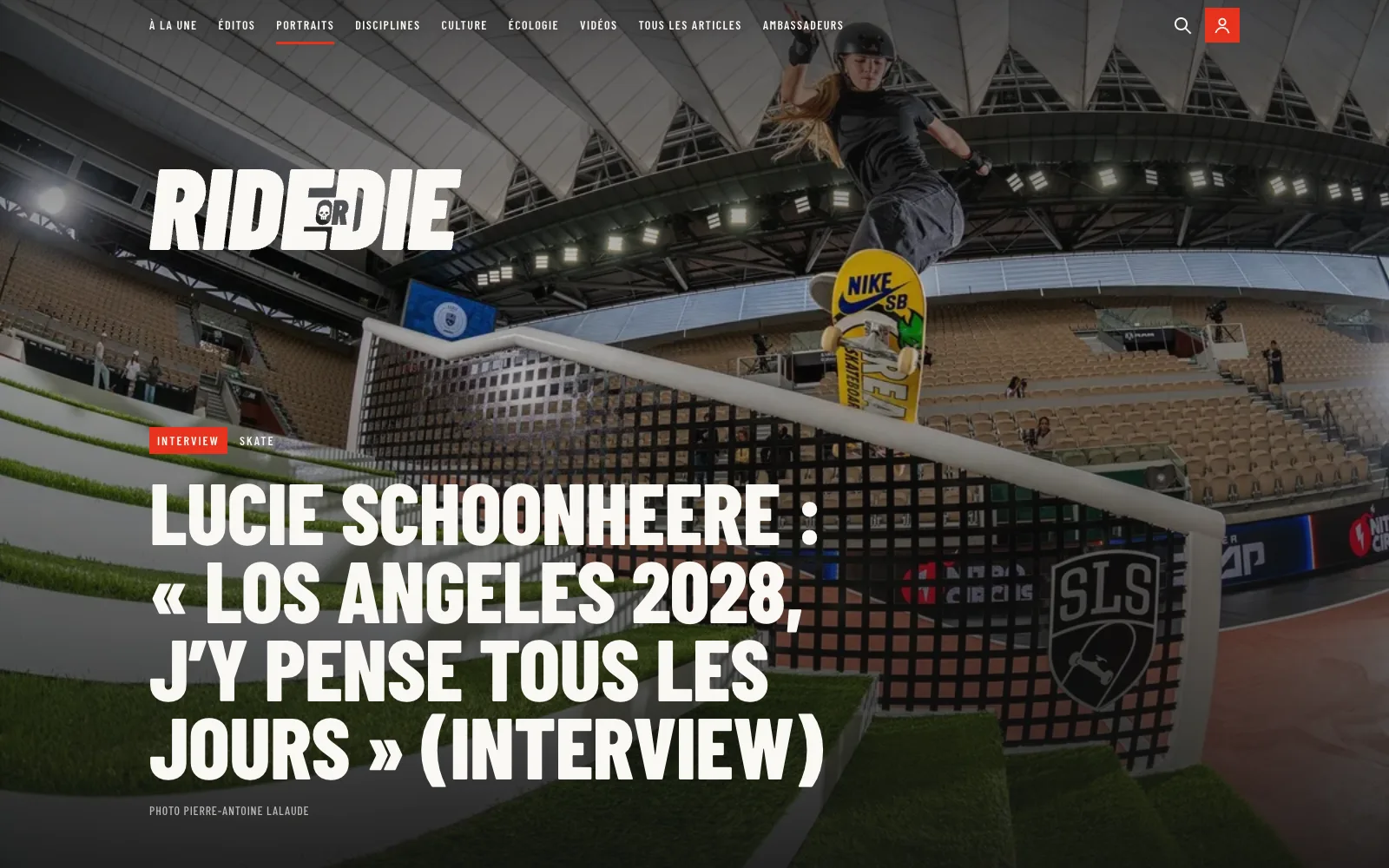
- Designed for phones first
- Installable app
- Every address kept
// The problem
Twelve years of articles on a site that had become too slow
Ride or Die has been covering board sports and adrenaline sports since 2014. Long interviews, rider profiles, editorials, culture and ecology: more than 420 articles written by a small newsroom. In 2026 the magazine is getting organised, with a publishing company, a sales team meeting brands and a growing newsroom.
The site could no longer keep up. The home page took almost six seconds to respond, reading on a phone was hard work even though two readers in three read there, and Google, the magazine's main acquisition channel, found a home page with no title, no description, no structured data and a sitemap that declared three times more tag pages than articles.
We took it all on at once: the magazine, the writing tool and the hosting, keeping every address already indexed.
// What we built
A magazine, a reader area and a writing tool
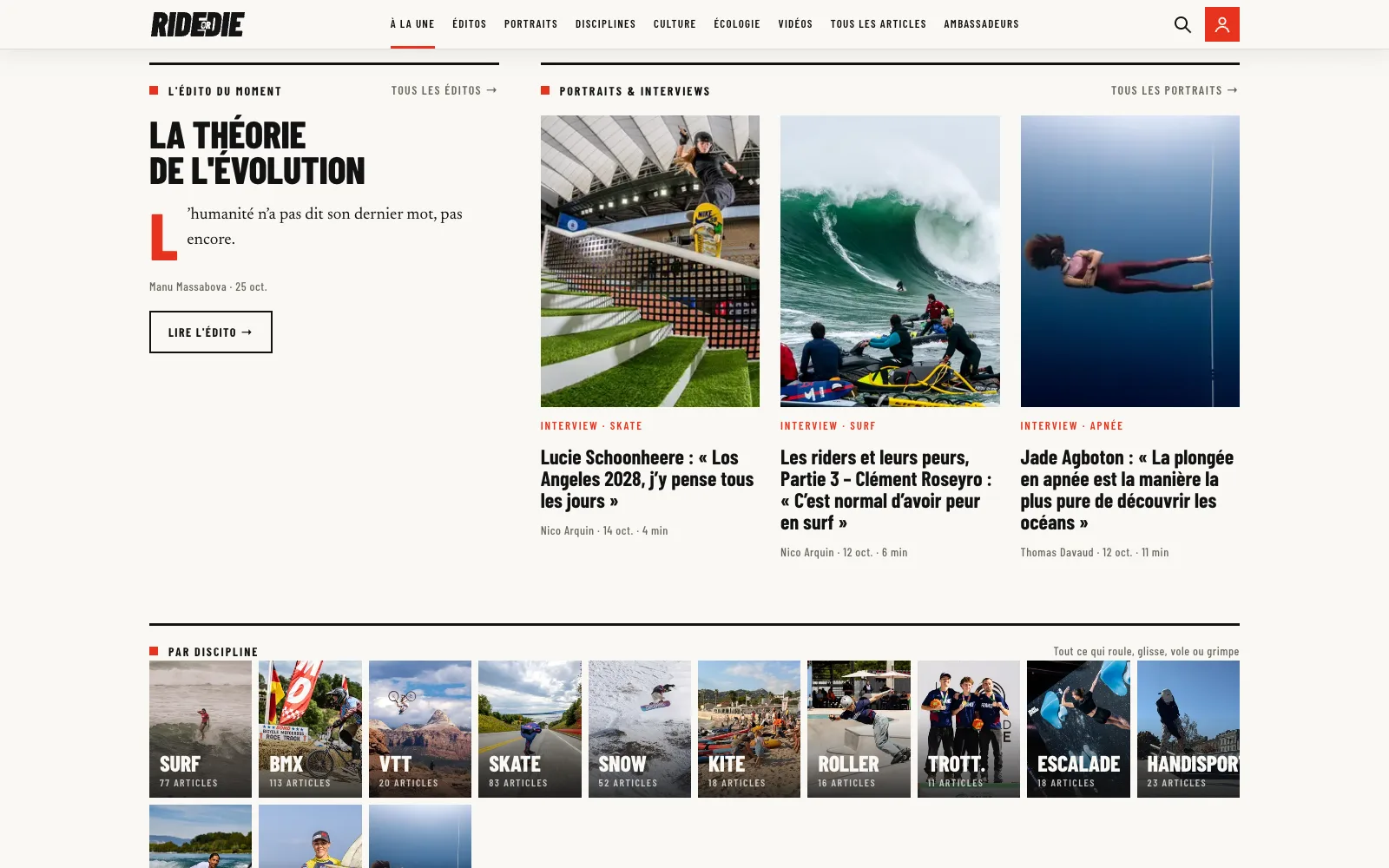
A home page laid out like a cover
The cover story fills the screen: photo, section, headline, standfirst, then three more front-page articles. Then come the editorial, profiles and interviews, disciplines, videos, culture and ecology, and the feed of latest articles. The header sits on the photo and turns into a compact bar as you scroll.
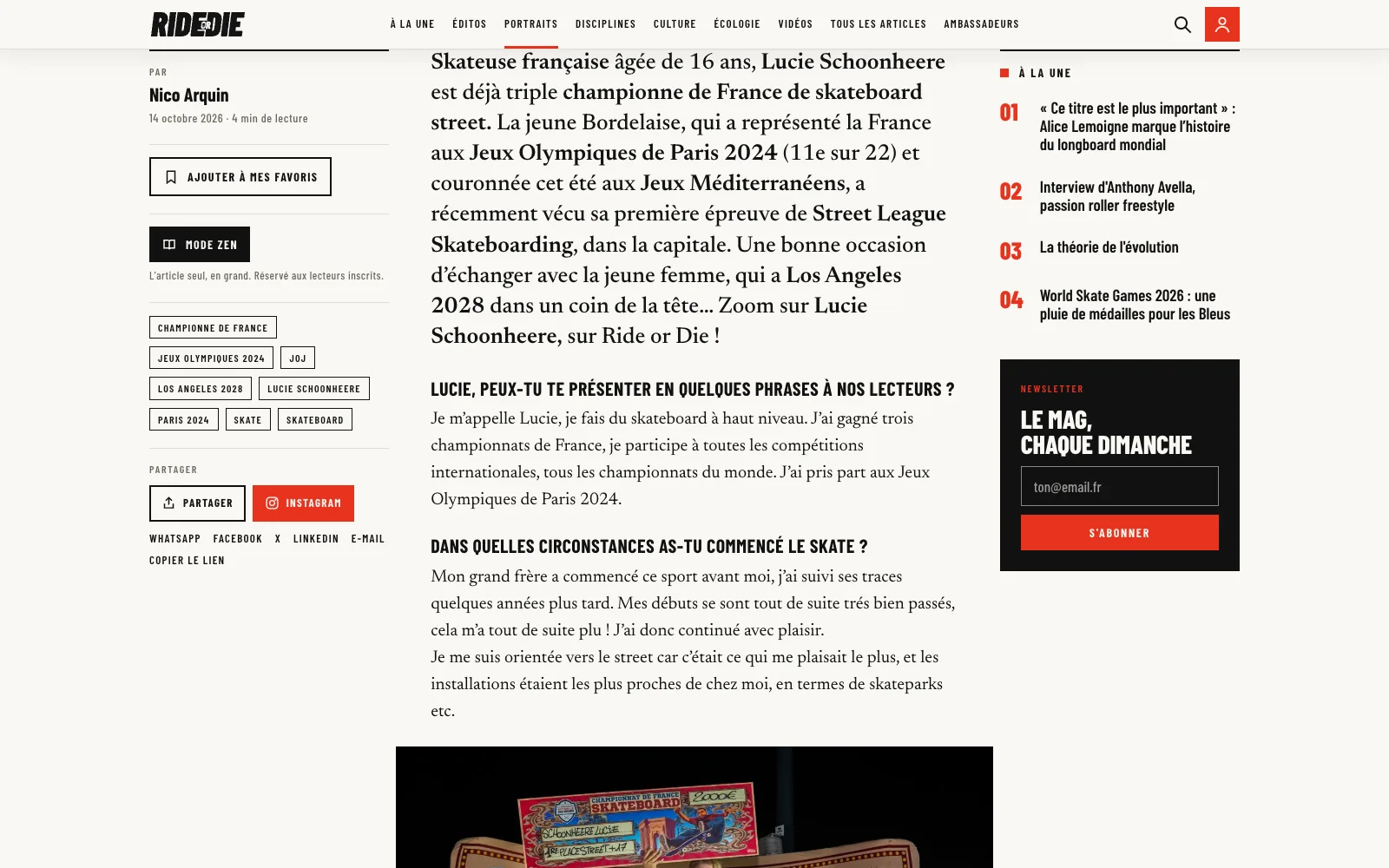
A reading page built for long interviews
Standfirst, drop cap, formatted interview questions, subheadings, photo credits as captions. Videos load on click, without contacting any third-party service beforehand. The left column carries the author, topics and sharing, the right column the front-page articles and the newsletter.
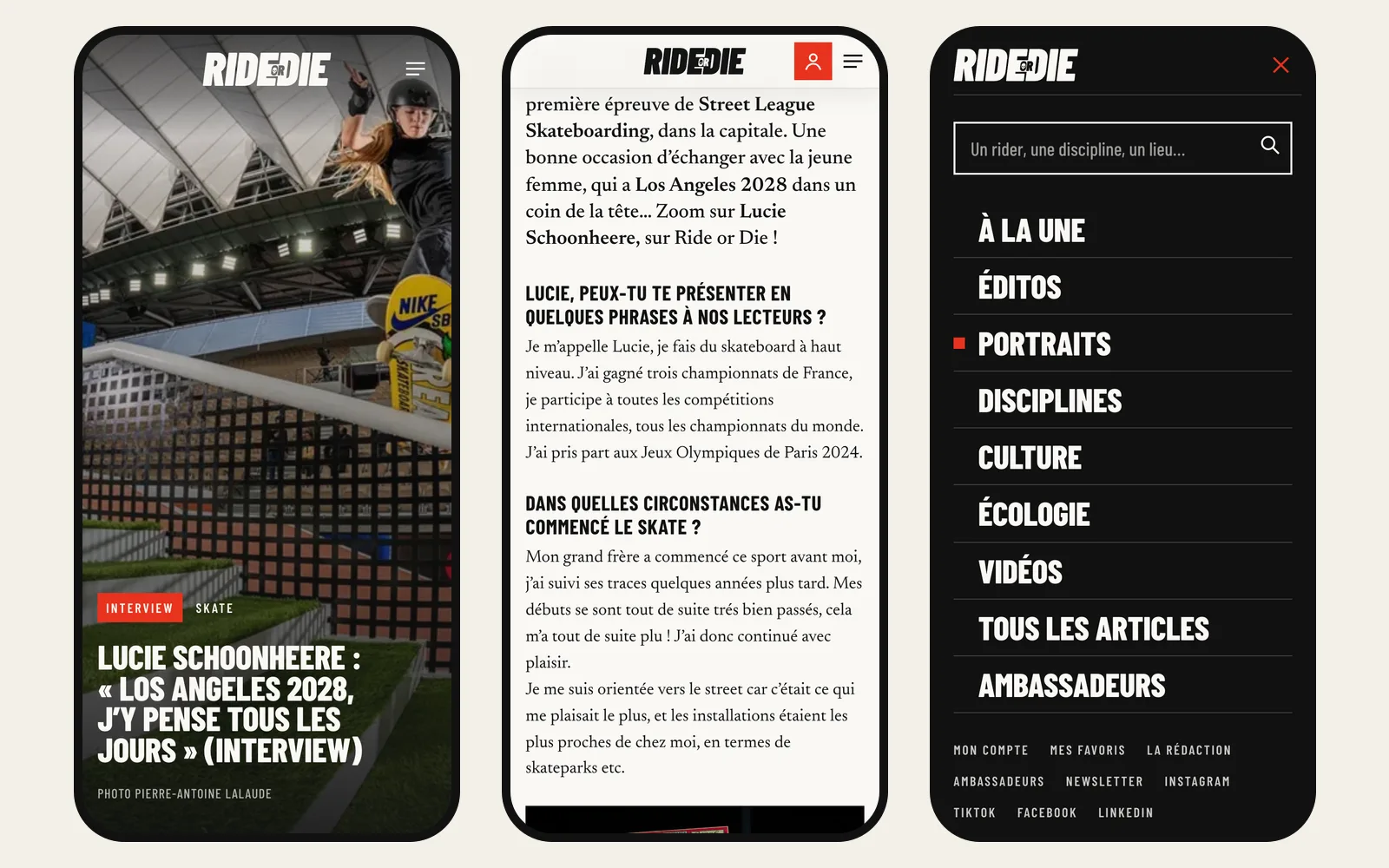
Designed for phones first, installable like an app
Two readers in three arrive on a phone. The cover story fits the first screen, body text keeps a proper reading size, and the menu opens full screen with search. The magazine installs on the home screen with its icon, its splash screen and an offline page.
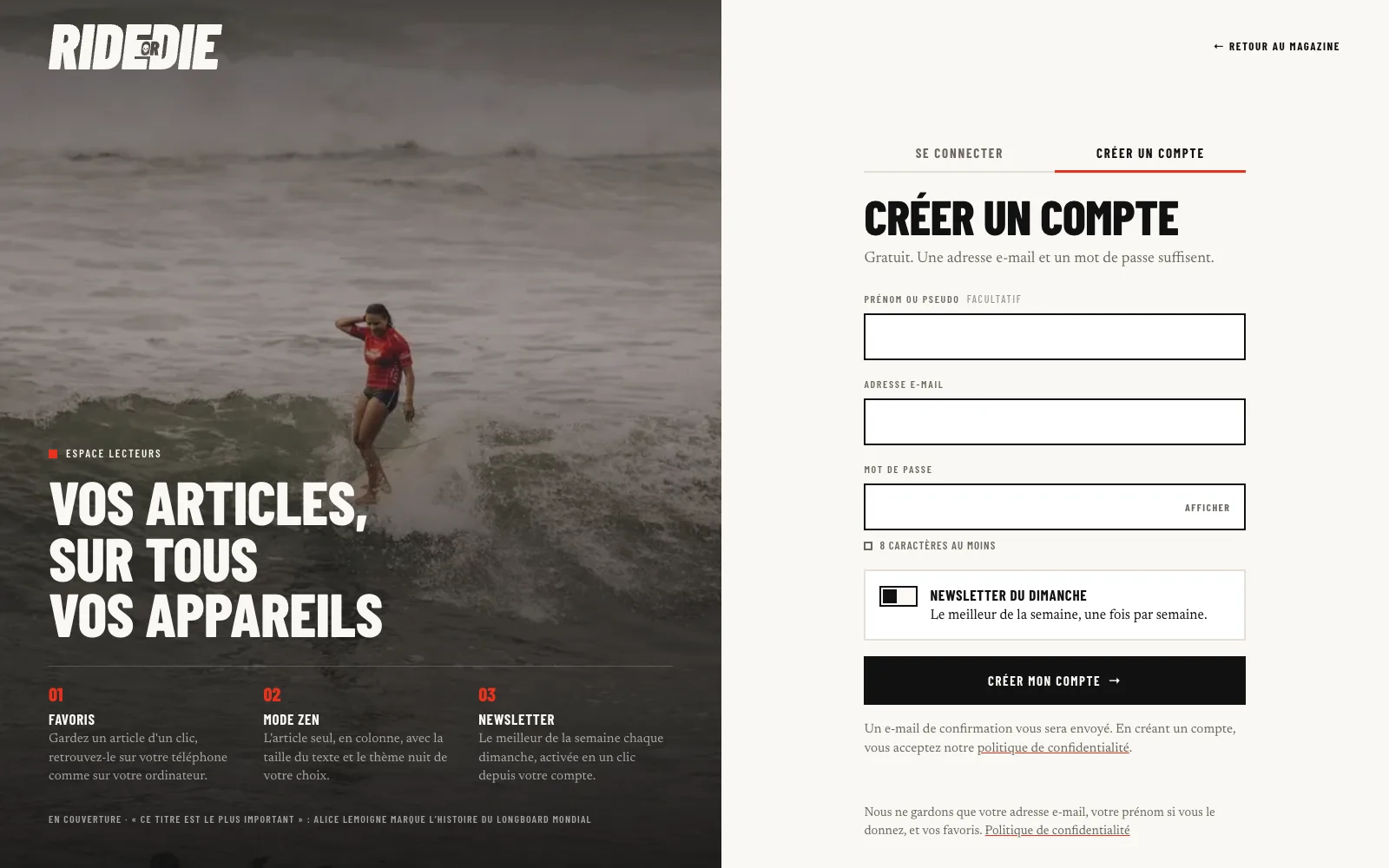
A reader area, from account to newsletter
Readers create an account confirmed by email, save articles to find them on all their devices and switch to zen reading mode: the article alone, adjustable text size, paper or night theme. Newsletter sign-up takes one click from the account, or a double opt-in in the magazine's colours.
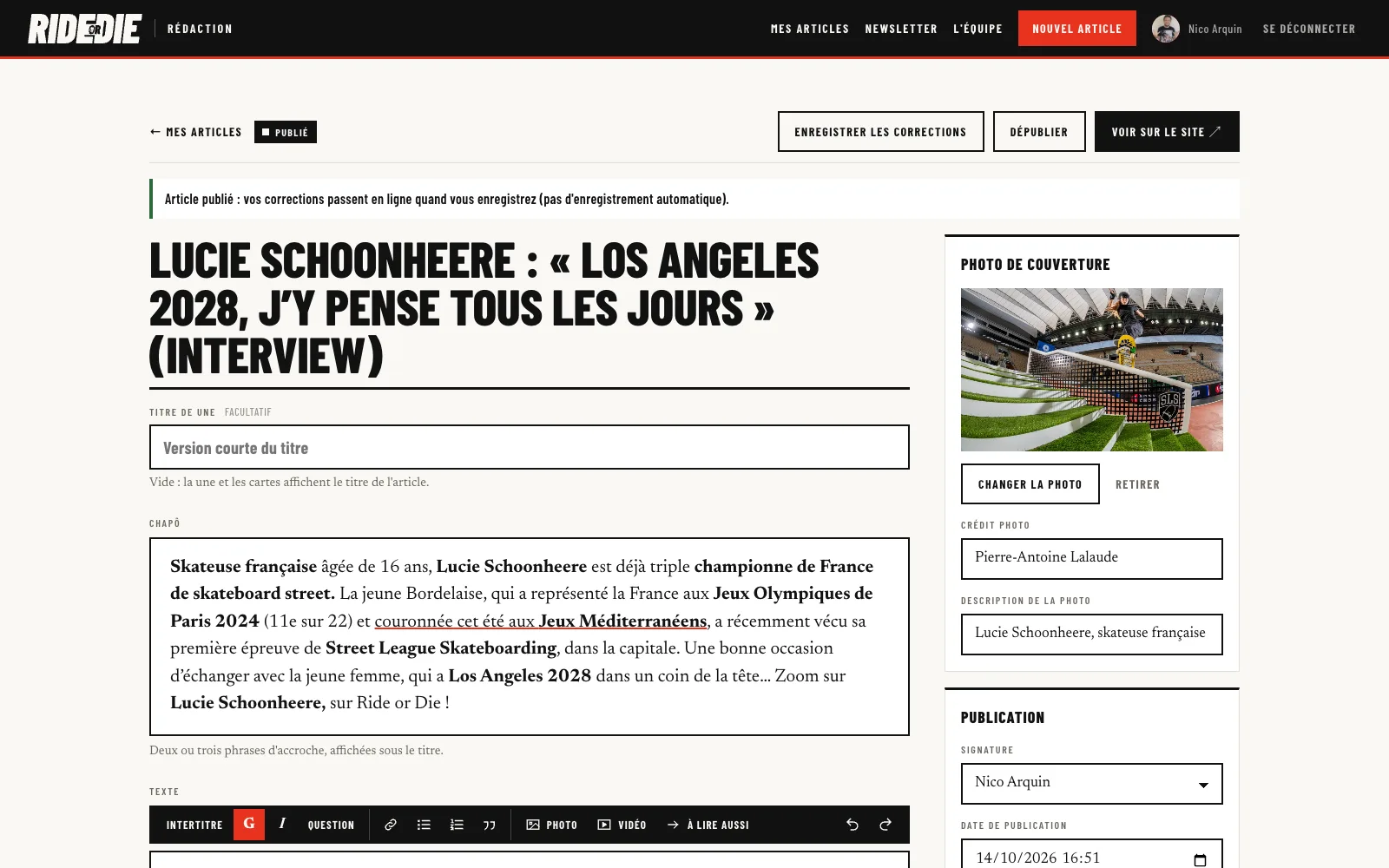
A writing tool made for the team
Writers work in a dedicated app: headline, standfirst, body text with the magazine's conventions (question, video, “Also read”), cover photo, classification, autosave. They send articles for review; the editors in chief correct, publish or schedule them, or send them back with a note.
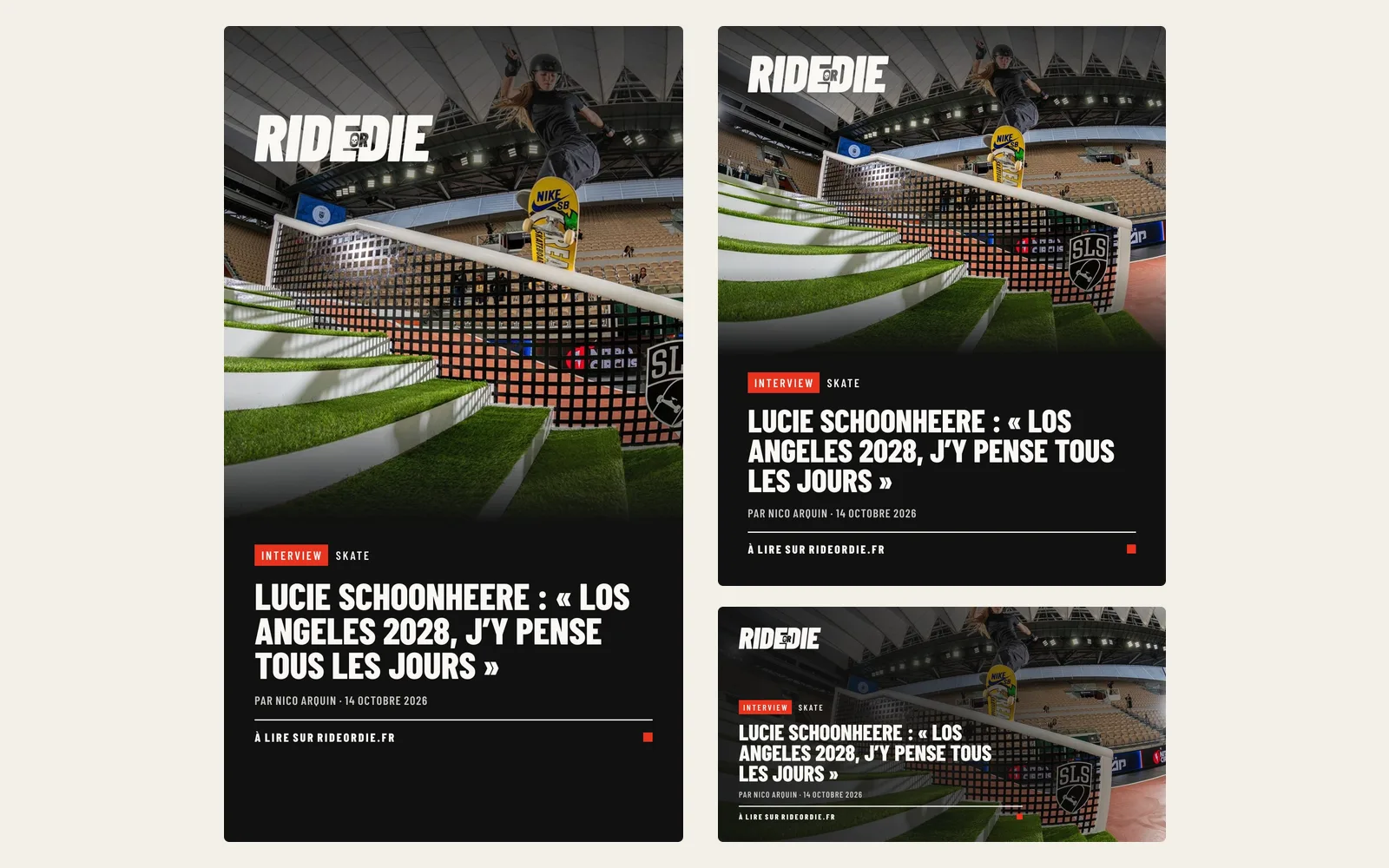
Share visuals generated for every article
Every article gets its Instagram story, its feed post and its link preview, built from the cover photo, section, headline and author in the brand's colours. On a phone, readers share the image straight to Instagram; the magazine's own account uses them for its posts.
// The decisions
Six choices that shaped the redesign
Keep every address
Articles keep the address they have had since 2014, and the old section, tag and author pages redirect to their new lists. With Google as the magazine's main channel, the switch could not cost a single indexed page.
A writing tool built for the team
We replaced the old publishing tool with a lightweight back office and a writing app designed for the newsroom. Writers work there with no access to administration or reader data.
Live in under a minute
Pages are rendered on demand, then cached. A new article or a correction is visible in under a minute, without rebuilding the site, and pages keep being served even if the magazine restarts.
Visuals generated at publication
Every article produces its share visuals when it goes live, from the style guide. The team has no visual to prepare to promote an article, and every share reaches social media in the magazine's identity.
Three access levels
Writers write, the editors in chief review and publish, and administration stays with the two founders. An account that still signs articles cannot be deleted, so no article is ever left without an author.
Hosted and monitored by the studio
The magazine runs on a dedicated server, with a daily backup tested by restoring it and a maintenance page that steps in on its own. All for the budget the magazine already spent on hosting.
// AI first · Archive migration
Twelve years of archives carried over, address by address
The redesign is built AI first. Agents audited the old site, wrote and replayed the content migration, reviewed the code and checked every address; the team approved each step and settled the special cases. The day after the first screen, the complete preview, magazine, reader area and back office, was in testing with the founders.
- Inventory
- 424 articles published since May 2014, 1,253 media files, 1,326 tags, and their flaws: formatting pasted from a word processor, embedded videos, absolute internal links, cover images with no alt text.
- Clean-up
- Every article brought into the magazine's writing conventions: 1,346 interview questions, 810 videos loading on click, 214 standfirsts extracted, 163 “Also read” boxes.
- Classification
- Disciplines rebuilt from the tags, duplicate authors merged, fixed pages carried over: legal notice, privacy, contact, terms of sale.
- Checks
- 2,059 internal links and 1,922 images checked, no page missing. The 28 videos removed from YouTube by their authors are flagged with a note in place of the player.
Search
A title and description on every page, article structured data, a share preview for every article, and a sitemap cut down to useful pages: 688 addresses declared at migration, against 1,263 tag pages before. Topics with fewer than three articles are no longer offered for indexing.
// The publishing workflow
From writing to sharing, in a single tool
An article always follows the same path: written by a writer, reviewed by the editors in chief, published or scheduled, then promoted with its visuals. Each step notifies the next person by email, and none goes through the site's administration.
- 01 · WritingThe writer
- newsroom app
- autosave
- magazine conventions
- 02 · ReviewEditors in chief
- “To review” email
- corrections in the article
- sent back with a note
- 03 · PublishingThe magazine
- live in under a minute
- or scheduled for a set time
- “Live” email to the writer
- 04 · VisualsThe formats
- story 1080 × 1920
- feed post 1080 × 1350
- link preview 1200 × 630
- 05 · DistributionReaders and social
- direct share to Instagram
- WhatsApp, Facebook, LinkedIn
- RSS feed
Coming next- Sunday newsletter
- 06 · Follow-upAfter publication
- corrections live within a minute
- unpublish in one step
- writer notified
Coming next- weekly audience report
A correction goes back to publishing and shows on the magazine within a minute.
Each account sees only what its role requires: a writer accesses their own articles, never reader data or administration.
// Questions
Frequently asked questions
What is Ride or Die?
Ride or Die is the online magazine of adrenaline sports: surf, skate, BMX, mountain bike, snow, kite, climbing. Since 2014 it has published interviews, rider profiles, editorials and stories on culture and ecology, on rideordie.fr.
What did Unslash do for Ride or Die?
Unslash, a tech and data studio, designed and built the magazine, the reader area and the newsroom tool, migrated the archives back to 2014 and hosts the site. The magazine's identity is by The good layer, EXAPHASE's branding and design studio.
Do the site's old addresses still work?
Yes. Every article keeps its original address, and the old section, tag and author pages redirect to their new lists.
How long did the redesign take?
12 days between the new magazine's first screen, on 14 October 2026, and its launch, on 26 October. The complete preview was in testing with the founders the next day.
Can Unslash rebuild another media brand's site?
Yes. Magazine, reader area, newsroom tool, archive migration and hosting can be handled together or separately. Timing and cost depend on the archive volume and the chosen scope, and are set at scoping.